
Peptide Compliance for Clinics: Sourcing, Safety & Regulations
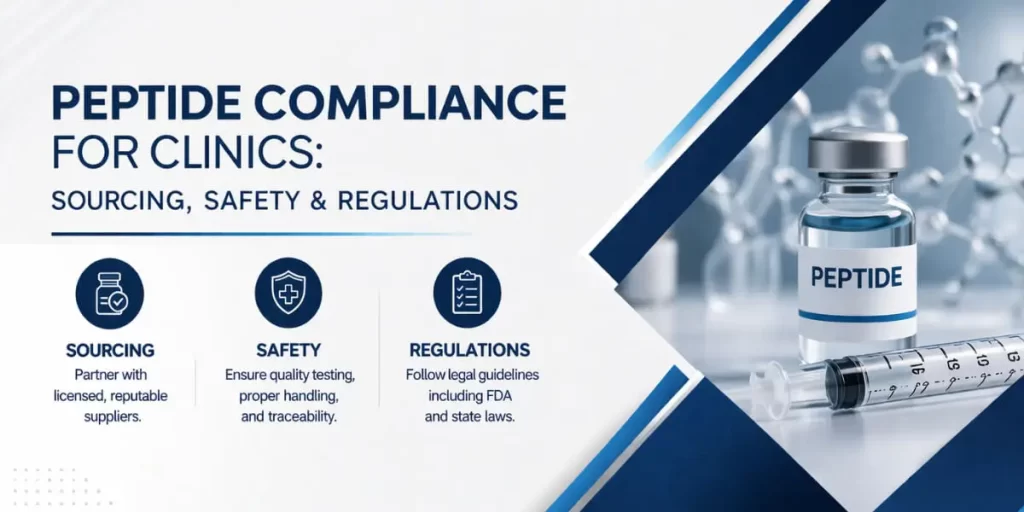
If you run a licensed clinic and you are exploring peptide-related therapies, one question tends to come up fast: how do you stay compliant while also protecting patients, prescribers, and your business?
That is exactly where understanding and implementing compliant peptide procurement solutions becomes vital for modern medical practices.
Peptides are everywhere right now – from wellness clinics to age management practices to medical conferences. But the real issue is not hype. It is process, documentation, legal sourcing and it is product verification. And, frankly, it is knowing what should never enter your clinic in the first place.
At InjectaConnect.Com, we act as a liaison, not a medical provider. We do not diagnose, prescribe, compound, dispense, or offer medical advice. But we do understand how important it is for licensed clinics and medical professionals to work within a careful, well-documented framework when evaluating sourcing pathways.
This guide explains the basics of compliant peptide sourcing, outlines the peptide safety standards clinics need to understand, and highlights the regulatory questions you should examine closely before considering any product for use.
Why peptide compliance matters so much for clinics
A lot of clinics focus first on whether a peptide is popular or requested by patients. That is understandable. But compliance has to come first.
The reason is simple. The peptide market contains a mix of products and claims that are not all held to the same standard. Researchers may discuss some products in scientific circles, but regulators have not approved them as FDA-approved drugs.
Marketers may promote others online using clinical-sounding language, even when they sell them for research use only. Manufacturers may compound certain products under limited circumstances, but clinics cannot source them casually or use them broadly. And some may raise clear red flags from the start.
For clinics, the risks of getting this wrong are serious:
| Compliance area | What can go wrong | Why it matters |
|---|---|---|
| Product legitimacy | Product is mislabeled, counterfeit, or sold as research-only material | Patient safety and clinic liability risks increase |
| Regulatory status | Clinic assumes a peptide is legal because it is online or widely discussed | Marketing availability is not the same as legal clinical use |
| Quality control | Inadequate sterility, potency, identity, or purity documentation | Could lead to patient harm or failed treatment expectations |
| Documentation | Missing lot records, certificates, or source verification | Weakens audit readiness and internal compliance |
| State and federal rules | Product pathway does not fit prescribing or compounding regulations | Could expose clinic to enforcement or disciplinary action |
So when clinics ask, are peptides legal for clinics, the most accurate answer is: it depends on the specific product, its regulatory status, its source, and how the clinic intends to use it.
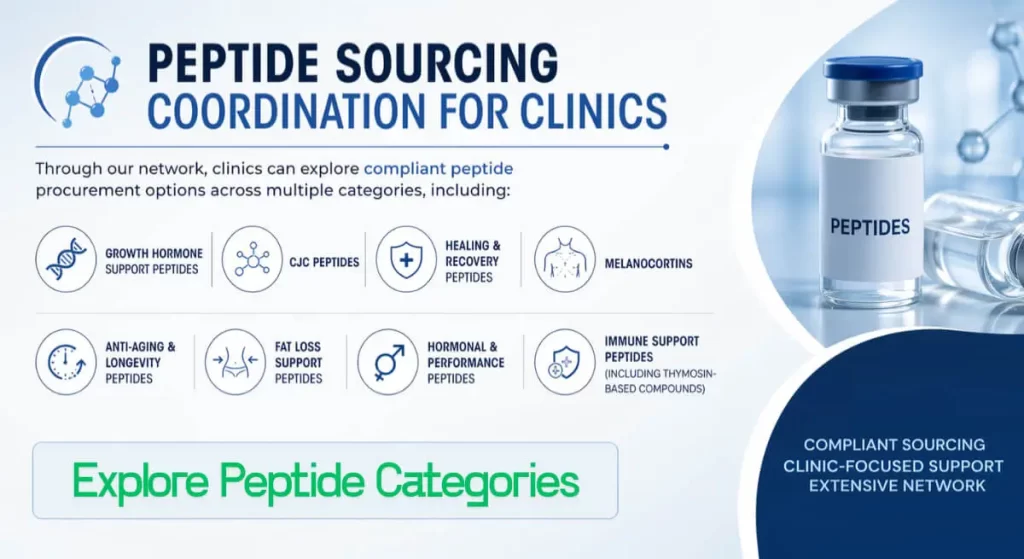
Start with the most important distinction: approved drugs versus non-approved peptides
One of the biggest sources of confusion in this space is that people use the word peptide very broadly.
Manufacturers have FDA-approved some peptide-based drugs as prescription products with official labeling, known manufacturing standards, and established indications. Practitioners discuss others in wellness or anti-aging settings, but regulators have not approved them for those uses. And some vendors sell others online as research compounds, which should immediately raise concern for any clinic considering patient-facing use.
Here is the practical distinction.
| Category | What it means | Compliance implication for clinics |
|---|---|---|
| FDA-approved peptide drug products | Products approved by FDA with labeled indications and manufacturing oversight | Clinics should rely on approved labeling, licensed distribution, and lawful prescribing standards |
| Compounded peptide preparations | Customized preparations made by properly licensed outsourcing facilities or pharmacies under specific legal conditions | Requires careful review of compounding rules, state law, product eligibility, and documentation |
| Research-use-only peptides | Materials not intended for human use | Should not be treated as clinic-ready patient products |
| Unclear or gray-market peptide products | Online or unofficial products with weak source transparency | Represents major non compliant peptide sourcing risks |
This is why clinics need a clinical peptide verification process before purchasing anything.
What compliant peptide sourcing should look like
A clinic does not need to become a manufacturer to make smart sourcing decisions. But it does need a repeatable vetting process.
At a minimum, compliant peptide sourcing should answer all of these questions:
1. What is the exact regulatory status of the product?
Before anything else, your team should know whether the item is:
- an FDA-approved drug product
- a compounded preparation from a licensed pharmacy or outsourcing facility
- a bulk substance under review or restriction
- an unverified item sold through non-medical channels
- a research-use-only product
This first step eliminates a lot of confusion.
2. Who is the actual source?
Clinics should know the name, licensure status, and role of the supplier. Is the source a licensed wholesaler, manufacturer, registered outsourcing facility, or pharmacy? Or is it an internet seller with vague contact information and flashy claims?
A source should be transparent, not evasive.
3. What documentation is available?
Strong peptide sourcing documentation matters. Depending on the product and pathway, clinics may need to review:
- Certificate of Analysis
- lot number and batch information
- expiration or beyond-use dating where applicable
- state licensure and facility credentials
- shipping and storage requirements
- chain-of-custody records
- documentation of sterility and potency testing where relevant
- purchase records and invoices
If a seller cannot provide basic verification, that is not a small problem. It is a major one.
4. Does the product align with peptide quality standards that clinics should expect?
For any clinic it is important to understand that quality is not just about a clean-looking vial or polished website. It is about verifiable controls.
Therefore clinics should look for evidence tied to:
- identity
- potency
- purity
- sterility, where applicable
- endotoxin controls, where applicable
- storage stability
- traceability
A clinic should be able to explain, on paper, why a source was considered credible.
FDA-approved labeling should anchor your review
One of the safest habits a clinic can build is to anchor review decisions in FDA-approved drug labeling whenever an approved peptide drug product is involved.
FDA-approved labeling helps establish:
- approved indications
- dosing forms and strengths
- route of administration
- contraindications and warnings
- storage instructions
- adverse reactions
- dispensing and handling details
That does not answer every operational question, but it gives clinics a reliable starting point grounded in an official regulatory framework.
This matters because online peptide discussions often blur the line between approved use, off-label discussion, investigational interest, and pure marketing hype.
Licensed professionals already know that not every trending therapy has the same evidentiary or legal footing. Still, in peptide procurement regulations, the pressure of patient demand can make shortcuts feel tempting. That is exactly when disciplined review matters most.
Higher-risk examples clinics should treat carefully
Let’s talk about examples often searched by clinics.
BPC-157 compliance sourcing
BPC-157 is frequently discussed online and in regenerative medicine communities. But popularity does not equal FDA approval. A clinic evaluating BPC-157 compliance sourcing should begin with a very basic question: what legal and regulatory pathway, if any, supports the product being considered for clinical use in your jurisdiction and setting?
If the only available source is a research chemical website or a seller avoiding clear regulatory language, that is a major red flag.
CJC 1295 Ipamorelin sourcing standards
CJC 1295 and Ipamorelin are also widely discussed in wellness circles. For clinics assessing CJC 1295 Ipamorelin sourcing standards, the same principle applies. Do not assume that common use in marketing or online communities means the product is FDA-approved, legally distributable for your intended use, or suitable for patient administration.
Documentation, legal pathway, and pharmacy or facility credentials matter here.
NAD+ therapy sourcing compliance
NAD+ sourcing is another area where clinics should separate interest from evidence and legal sourcing reality. Depending on formulation, route, and source, the compliance review may involve a mix of pharmacy verification, ingredient review, storage validation, and state-specific practice considerations.
Again, the takeaway is not that a clinic can never explore these categories. The takeaway is that every product must survive a documented compliance review before any operational next step is considered.
Red flags that suggest non-compliant peptide sourcing risks
Sometimes the warning signs are obvious. Sometimes they are subtle. Here are common issues clinics should treat seriously.
| Red flag | Why it matters |
|---|---|
| Product marketed as research use only | Not appropriate for patient-facing clinical use |
| Supplier avoids discussing licensure or registration | Weak transparency can signal weak compliance |
| No lot-specific documentation | Limits traceability and quality verification |
| Claims that a peptide is legal everywhere | Oversimplified legal claims are usually unreliable |
| Very low pricing without explanation | May indicate quality or authenticity concerns |
| Website focuses on bodybuilder or consumer hype language | Often not aligned with medical distribution standards |
| No proper storage or shipping controls described | Product integrity may be compromised |
| Vague statements about sterility or purity | Claims should be documented, not implied |
Building a practical clinic-level peptide verification workflow
A useful process does not have to be complicated. It just has to be consistent.
Here is a simple clinic-side framework for a clinical peptide verification process.
| Step | What the clinic should review |
|---|---|
| Product identification | Exact name, formulation, strength, route, and intended use |
| Regulatory check | FDA approval status, compounding pathway, state law fit |
| Source vetting | Manufacturer, wholesaler, pharmacy, or outsourcing facility credentials |
| Documentation review | COA, lot numbers, testing records, licensure documents |
| Labeling review | FDA-approved labeling where applicable |
| Storage and handling | Cold chain, shelf life, shipping controls |
| Internal sign-off | Medical director, compliance lead, legal review as needed |
| Record retention | Invoices, product files, vendor review history |
This kind of system helps clinics move from informal sourcing to documented sourcing. And that shift matters.
How communities and medical authority discussions shape current caution
Across US medical authority blogs, regulatory commentary, pharmacy law discussions, and professional communities, a common theme keeps showing up: caution around peptide sourcing is increasing, not decreasing.
Why?
Because clinics are operating in a space where public demand often moves faster than regulation, and marketing often moves faster than evidence. FDA communications, pharmacy compliance discussions, and clinical risk conversations routinely stress documentation, legitimacy of source, lawful compounding parameters, and patient safety.
In plain terms, professionals are being reminded to ask harder questions before buying.
That is not about fear. It is about maturity.
A well-run clinic does not want to be the one explaining why a product with unclear sourcing, poor records, or questionable legal status entered its workflow.
What licensed clinics can do right now
If your clinic is evaluating peptides or peptide-related therapies, here are sensible next steps:
- Audit your current sourcing channels
Review whether every product source is licensed, documented, and appropriate for clinical procurement. - Separate approved, compounded, and research categories
Do not let them get mixed together in internal conversations or vendor review. - Build a peptide sourcing documentation checklist
Make it part of purchasing, not an afterthought. - Ask state-specific questions
State board and pharmacy rules may affect what is appropriate in your practice setting. - Use compliance and legal review before expansion
This is especially important if your clinic is adding new peptide-related service lines. - Train staff on language and limits
Front-desk teams, coordinators, and marketing staff should not make loose claims about legality, safety, or outcomes. - Revisit vendors regularly
A source that looked acceptable a year ago may not meet your standards today.
Final thoughts
Peptide compliance for clinics is not just about avoiding problems. It is about building a stronger clinic.
When clinics source carefully, maintain clear documentation, and properly review regulatory status, they can better protect patients, support prescribers, and maintain operational integrity.
The key idea is simple. If a peptide product cannot be clearly explained from a sourcing, safety, documentation, and regulatory standpoint, it should not move forward casually.
At InjectaConnect, we believe licensed clinics deserve a cleaner, more transparent way to think about sourcing conversations. As a liaison, not a provider, our role is to support organized communication and informed operational thinking, not to give medical advice or make clinical decisions.
And honestly, that clarity helps everyone.